
Why Corporate Travellers Are Ditching Hotels for Mid-Term Rentals (And How Kent Landlords Win)
- hughchampneysltd
- Feb 2
- 5 min read
The corporate travel landscape is experiencing a seismic shift. Business professionals are abandoning traditional hotels in droves, and they're heading straight for mid-term rentals. This isn't a temporary trend: it's a fundamental restructuring of how companies and employees approach extended work assignments.
For Kent landlords, this represents one of the most significant opportunities in the property market right now. The numbers tell a compelling story: mid-term bookings have surged 136 percent between 2019 and the end of 2025, climbing from 20 million to 46 million nights. Meanwhile, short-term rentals grew just 52 percent over the same period.
If you're currently focused exclusively on traditional long-term lets or weekend Airbnb stays, you're missing out on a rapidly expanding segment that offers better returns, lower turnover, and more predictable income.
Why Corporate Travelers Are Making the Switch
The Cost Equation Changes Everything
Hotels look affordable on paper: until you add up the hidden costs. A £120-per-night room seems reasonable, but then come the parking fees (£15-25 per day), Wi-Fi charges, laundry services, room service, and those £12 breakfasts. For a two-week business trip, these "extras" can add £500-800 to the bill.
Mid-term rentals flip this model. One flat monthly rate typically includes utilities, high-speed internet, and a fully equipped kitchen. When you can cook dinner instead of ordering £30 takeaway meals every night, the savings compound quickly. For stays over 30 days, corporate housing proves significantly more cost-efficient than hotels: and finance departments have noticed.

Productivity Demands Better Workspaces
The remote work revolution changed what business travelers need from accommodation. Hotels remain designed for sleeping and short stays. That cramped desk wedged into the corner? The unreliable Wi-Fi? The housekeeper knocking at 10 a.m. during your video conference? None of it supports the modern professional's workflow.
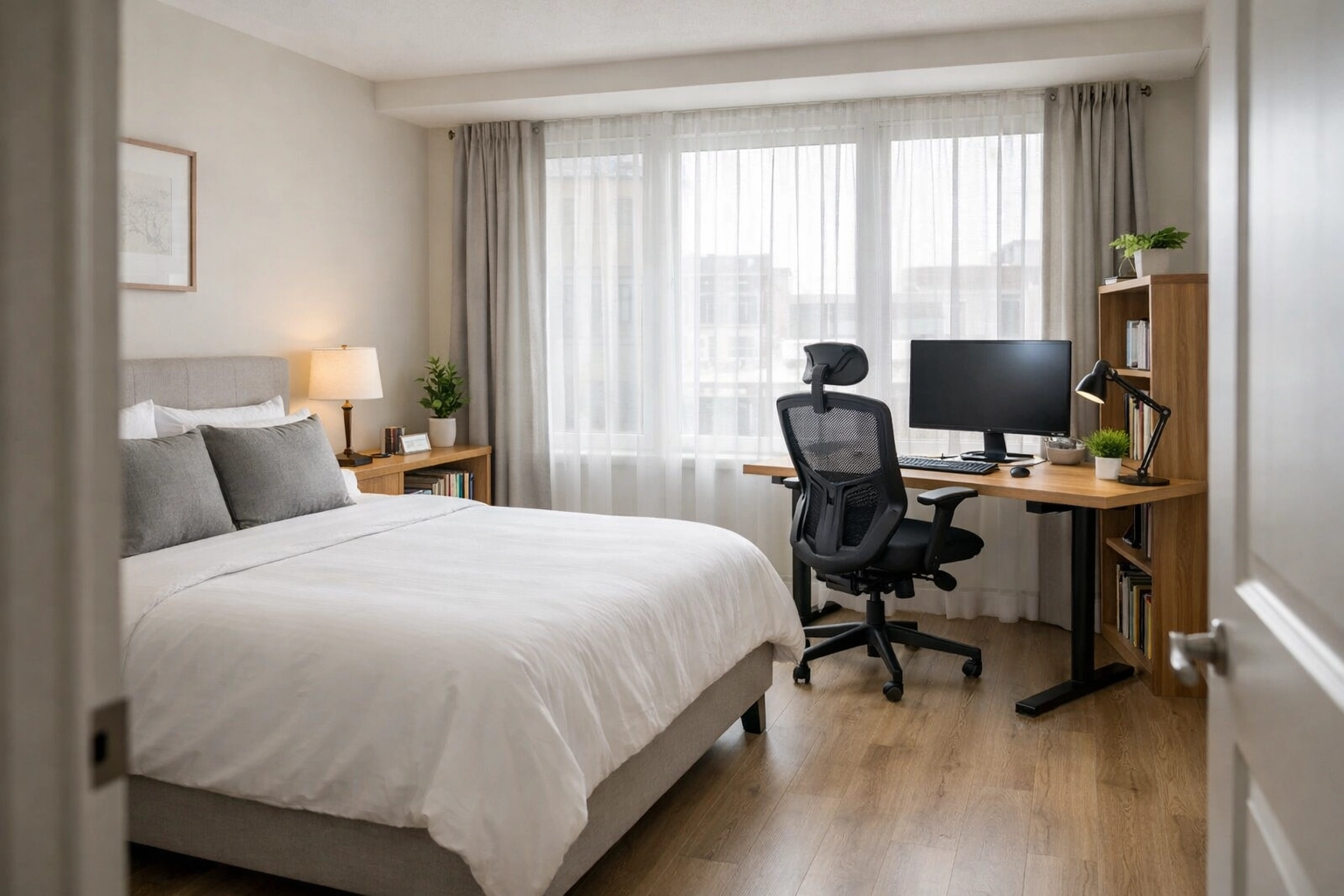
Corporate rentals are purpose-built for remote work. Fiber-grade internet isn't a luxury: it's standard. Adjustable desks, ergonomic chairs, quiet surroundings, and separate living spaces allow professionals to maintain productivity levels that match their home offices. When a consultant needs to deliver a critical presentation or a contractor must meet tight deadlines, environment matters enormously.
Flexibility Beats Rigidity
Traditional hotel stays offer minimal flexibility. You're locked into nightly rates that don't scale favorably for extended periods, and checkout policies remain inflexible regardless of stay length. Long-term leases run twelve months minimum: far too long for most business assignments.
Mid-term rentals occupy the sweet spot: flexible lease terms ranging from weeks to months. This appeals perfectly to traveling employees, contractors on temporary assignments, healthcare workers covering maternity leaves, and professionals managing project-based work. They need more than a hotel offers but can't justify a year-long commitment.
Livability Trumps Transaction
Here's what corporate travelers actually want: residential environments in real neighborhoods. Access to local restaurants, gyms, parks, and shops. Space to breathe after a long workday. Perhaps a balcony for morning coffee or a proper kitchen to prepare healthy meals.
Hotels cluster in crowded downtown districts optimized for tourism and business conferences: not comfortable living. Mid-term renters prioritize livability, reliability, and the ability to maintain normal routines while away from home. They want to feel settled, not in transit.
The Market Opportunity Is Massive
The corporate housing market is projected to reach £166.5 billion by 2032, reflecting 300 percent growth in assets and capacity. Monthly rentals now account for roughly 19 percent of total rental demand, with year-on-year growth of 8 percent: more than double the growth rate for short-term stays.
This isn't speculative. The demand spans diverse, stable tenant pools: business travelers, healthcare workers, relocating families, academics on sabbatical, digital nomads, and professionals between permanent homes. Economic volatility might reduce leisure travel, but business assignments, healthcare contracts, and corporate relocations continue regardless.
For Kent landlords specifically, the county's strategic location offers distinct advantages. Proximity to London positions Kent properties as cost-effective alternatives for professionals working on capital projects. The channel tunnel makes Kent attractive for European contractors. Plus, Kent's growing business parks and healthcare facilities generate consistent local demand.

How Kent Landlords Can Capitalize on This Shift
Furnish for Functionality, Not Just Aesthetics
Success in this market requires complete furnished solutions. Corporate travelers arrive with suitcases: they expect everything else in place. Essential elements include:
Fully equipped kitchen with quality appliances, cookware, and utensils
Reliable high-speed internet (minimum 100 Mbps)
Dedicated workspace with proper desk and ergonomic chair
Washing machine and dryer (crucial for extended stays)
Quality mattress and blackout curtains for proper sleep
Smart TV with streaming capability
Adequate storage for extended wardrobe needs
Focus on residential comfort over hotel-style minimalism. These guests are living in your property, not just sleeping there. Small touches: proper coffee maker, full-length mirror, sufficient electrical outlets: significantly impact satisfaction and reviews.
Price Strategically for Longer Commitments
Don't simply divide your monthly rent by 30 and charge that nightly. Develop tiered pricing that rewards commitment while maintaining profitability:
Weekly rate: 15-20% discount versus nightly accumulation
Monthly rate: 30-40% discount versus nightly, but significantly above traditional long-term rent
Three-month commitment: Additional 10% discount to secure extended occupancy
This pricing structure makes monthly bookings financially attractive to corporate clients while delivering landlords better returns than traditional lets: without the vacancy gaps and turnover costs of short-term rentals.
Reduce Turnover, Increase Profitability
Mid-term stays dramatically reduce the operational burden compared to short-term rentals. Instead of cleaning after every three-day booking, you're turning over properties monthly or quarterly. Fewer cleaning cycles mean lower costs. Reduced maintenance visits increase efficiency. Less administrative churn frees your time for portfolio expansion.
Vacancy rates drop substantially. A traditional Airbnb might sit empty 30-40% of the time between bookings. Mid-term rentals maintain high occupancy because guests commit for weeks or months at a time. This predictability allows better financial planning and reduces the stress of constant guest acquisition.
Market Through Specialized Platforms
While Airbnb and Vrbo accommodate longer stays, specialized platforms target corporate travelers specifically. Furnished Finder focuses on traveling healthcare professionals. Blueground caters to corporate relocations. These platforms connect you with pre-qualified tenants actively seeking mid-term accommodation: reducing your marketing effort and improving tenant quality.
I work with Kent landlords to optimize their properties for this market and connect them with the right platforms and tenant pools. The strategy isn't complicated, but execution details matter enormously.
The Competitive Advantage Is Now
Most landlords remain focused on traditional twelve-month lets or weekend holiday rentals. The mid-term corporate market remains underserved relative to demand: creating opportunity for landlords willing to adapt their approach.
The setup costs are modest. If your property is already furnished for holiday lets, you're halfway there. Add a proper workspace, upgrade the internet, and adjust your pricing strategy. If you're currently running unfurnished long-term lets, the furniture investment pays for itself within months through higher monthly returns and reduced vacancy.
The corporate housing market is growing at 8 percent annually: double the rate of short-term rentals. Companies are budgeting for this accommodation type. Professionals expect it. The infrastructure exists to support it. Early movers in Kent's mid-term rental market will establish reputations, secure repeat corporate clients, and build sustainable competitive advantages.
The question isn't whether corporate travelers will continue shifting toward mid-term rentals: that's already happening. The question is whether you'll position your Kent properties to capture this growing, profitable demand.
If you're interested in exploring how your property portfolio could benefit from this market shift, let's have a conversation about your specific situation and goals. The opportunity is substantial, and the timing is right.
Comments